

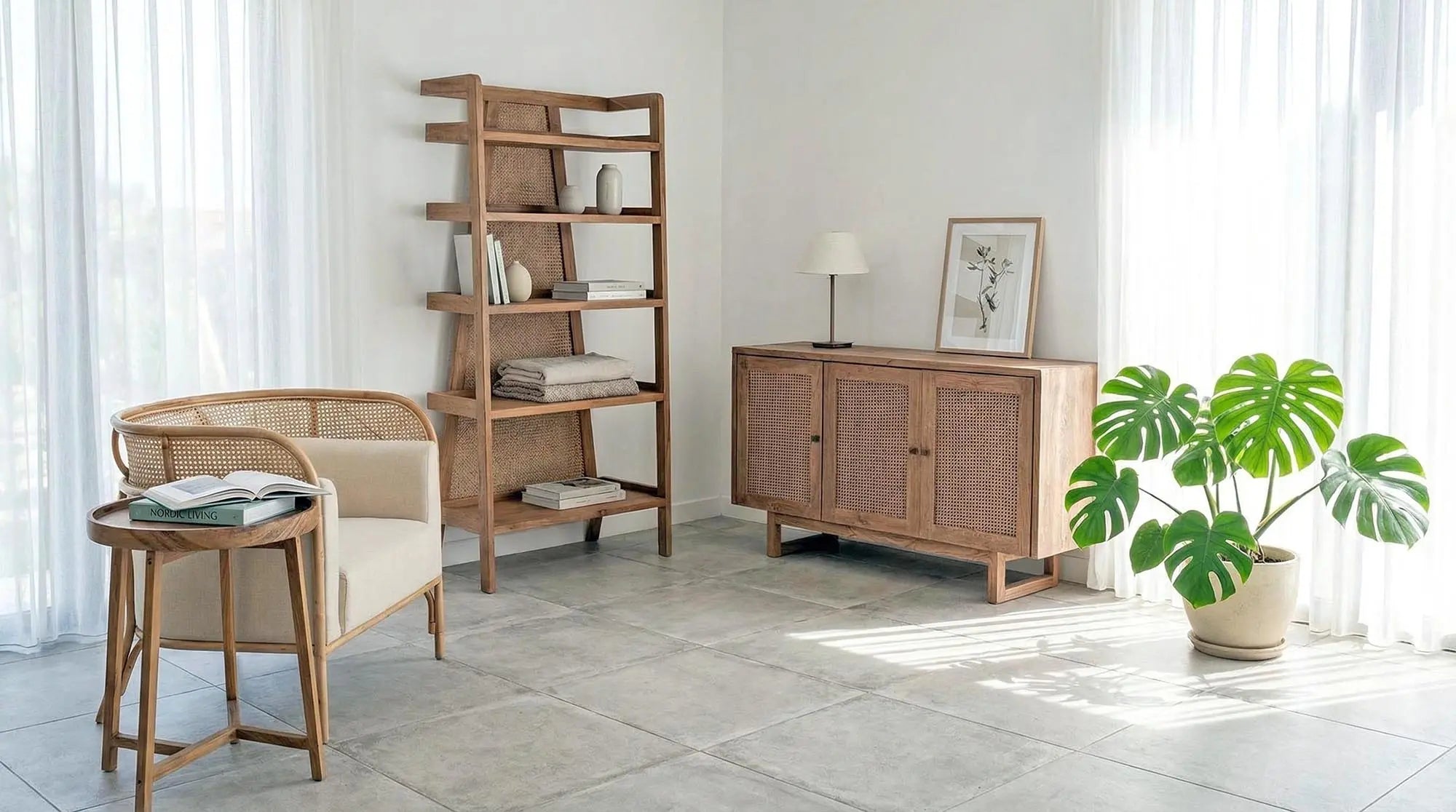
The Beauty of Organic Materials: Why Teak Wood and Rattan Are Ideal for Your Home
Introduction
In a world increasingly conscious about sustainability and environmental responsibility, organic materials have gained significant traction in interior design. Teak wood and rattan stand out as two of the most sought-after options, thanks to their durability, versatility, and timeless appeal. These materials not only add a touch of elegance to your home but also align with eco-friendly principles.

Why Teak Wood Is a Timeless Choice
Teak is admired for its rich, golden-brown hue and its robustness. It's a hardwood, known for withstanding extreme weather, which makes it suitable for both indoor and outdoor use. Over time, teak develops a lovely, silvery patina if left untreated, adding character and depth to any space.
Farmers source teak wood mainly from sustainable plantations, ensuring no depletion of natural forests. This aligns with a growing consumer demand for ethically produced goods. Its natural oils act as a built-in protectant against rot, insects, and warping, making teak a long-lasting investment. This durability not only justifies its premium price but also ensures that teak wood furniture remains a heritage piece for generations to come.
Homeowners appreciate teak's versatility. It effortlessly blends with various styles—from contemporary to classic—making it suitable for most decor preferences. Whether it's a sleek modern dining table or an intricately carved traditional chair, teak's ability to be both luxurious and understated makes it a universal favorite.

The Versatility of Rattan
Rattan, on the other hand, offers a different kind of appeal with its lightness and flexibility. Derived from climbing palms native to tropical regions, rattan is incredibly strong and can be woven into complex patterns, lending a breezy aesthetic to furniture. Its natural finish exudes a warm, inviting vibe, perfect for casual living areas, patios, or sun rooms.
Rattan's adaptability comes from its ease of manipulation. Artisans can shape it into a variety of forms, creating everything from woven chairs to intricate wall hangings. Moreover, rattan pairs beautifully with other materials like glass and metal, allowing homeowners to experiment with textures and designs.
Environmentally, rattan is a renewable resource, growing faster than most timber. Its harvesting process is less invasive, promoting sustainable forest management. As consumers increasingly seek eco-friendly options, rattan's rapid growth and minimal processing make it an attractive choice for green living. It's lightweight yet durable nature also makes it easy to move and rearrange, ideal for those who enjoy regularly refreshing their living spaces.
Sustainability in Design
Embracing organic materials like teak wood and rattan in home design supports broader sustainability goals. Many homeowners are shifting priorities towards eco-conscious living, making the provenance of their furniture and decor as important as its aesthetic appeal. Both teak and rattan stand as excellent examples of materials that marry sustainability with style.
Opting for organic materials reduces the reliance on synthetic products and non-renewable resources. It further encourages the preservation of natural habitats as responsibly managed forests and plantations are vital to the supply chain. This ethical consideration can be a significant selling point for environmentally-aware consumers who want their home to reflect their values.
Incorporating teak wood and rattan also supports artisan communities. These materials are often crafted in regions where traditional skills are passed down through generations, ensuring not just economic benefits to these areas, but also cultural preservation. Thus, purchasing such pieces can provide a sense of connection to a rich heritage and craftsmanship.
FAQ
Q1: How do I properly maintain teak and rattan furniture?
A1: Teak requires minimal maintenance; occasional cleaning with mild soap and water is sufficient. To retain its golden color, apply teak oil annually. Rattan should be dusted regularly and cleaned using a damp cloth—avoid harsh detergents as they can damage the material.
Q2: Are there any drawbacks to using organic materials like teak and rattan?
A2: While durable, both teak and rattan can be pricier than synthetic options. Teak can also be heavy, making it less ideal for frequent rearranging. However, their benefits often outweigh these considerations, offering long-term value and sustainability.
Q3: Can teak and rattan be used in every climate?
A3: Yes, teak is resilient to extreme weather conditions, ideal for both humid and dry climates. Rattan is best suited for indoor or covered outdoor areas to prevent potential weather damage over time.

Conclusion
Incorporating teak and rattan into your home's design scheme is not only a testament to timeless style but also an affirmation of sustainable living. These organic materials offer durability, elegance, and a deep connection to nature, harmonizing perfectly with contemporary lifestyle demands. In choosing teak and rattan, you're making a choice that's both beautiful and responsible, ensuring your home is a sanctuary of both luxury and environmental mindfulness.
Share:
Sustainable Elegance: Handcrafted furniture from Organic and Recycled Materials
Is Boho Style the Same as Farmhouse?